 how-to
Tips for Finding Top Tier Caviar: A Buyer's Guide
Table of Contents
- Start With the Species: What Top Tier Caviar Actually Is
- How to Tell If Caviar Is High Quality
- Best Caviar for Beginners: Mild, Forgiving, and Worth the Money
- Caviar Price per Ounce: What You Are Actually Paying For
- How to Buy Caviar Safely: Labels, Traceability, and Cold Chain
- Tasting Top Tier Caviar: A Structured Method
- Common Buying Mistakes That Waste Money
- Frequently Asked Questions
Last Updated: October 20, 2026
Start With the Species: What Top Tier Caviar Actually Is
Top tier caviar is not defined by price or by the label on the tin. It is defined by species, freshness, and handling. At Le Nocturne, we serve caviar alongside our French menu.
Here is the uncomfortable truth: two tins can look identical and taste nothing alike. Species drives flavor, bead size, and texture more than any other factor. That is why the first step in finding top tier caviar is learning which fish you are buying from.
Sturgeon Species and What Each One Delivers
Beluga is the largest and rarest sturgeon, producing large, soft beads with a delicate, buttery flavor.
Osetra offers a firmer bead with a nutty, sometimes briny finish. It is the middle ground most experienced buyers reach for.
White sturgeon, farmed widely in California and the Pacific Northwest, produces medium beads with a clean, mild flavor. It is the most forgiving entry point for beginners.
American paddlefish roe is often sold as an affordable alternative. The beads are smaller and the flavor is milder, but the texture holds up well.
Salmon roe is not caviar in the traditional sense. The beads are larger, brighter orange, and much saltier. It is delicious, but do not confuse the two.
How to Tell If Caviar Is High Quality
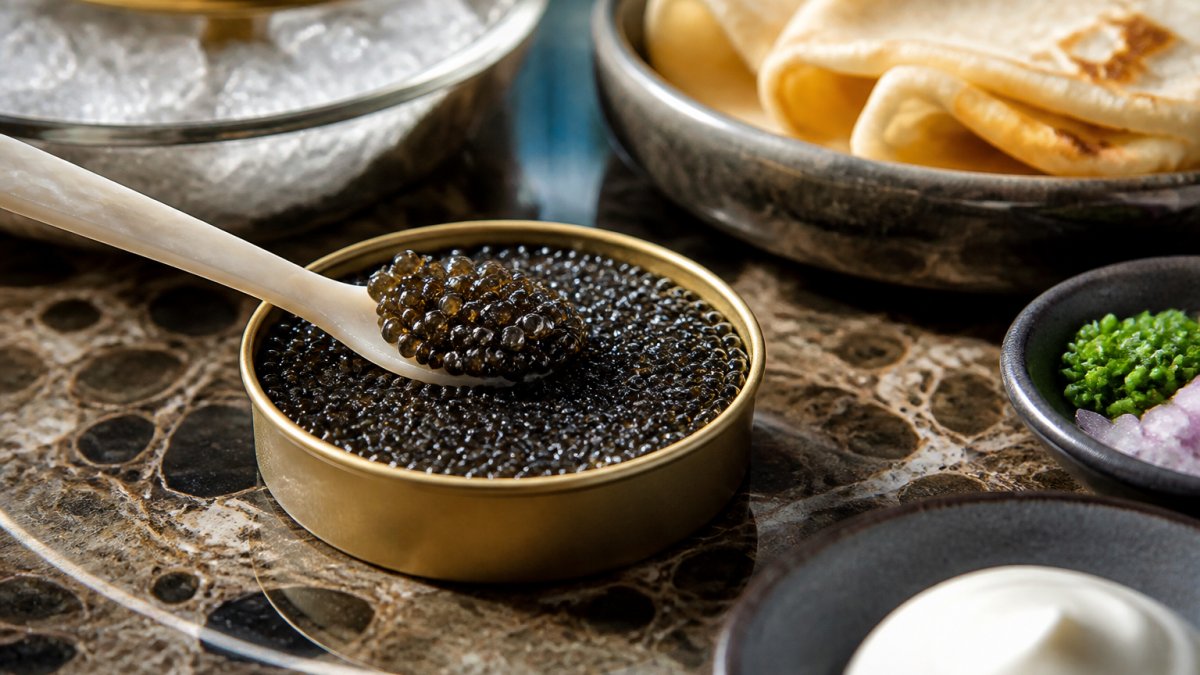
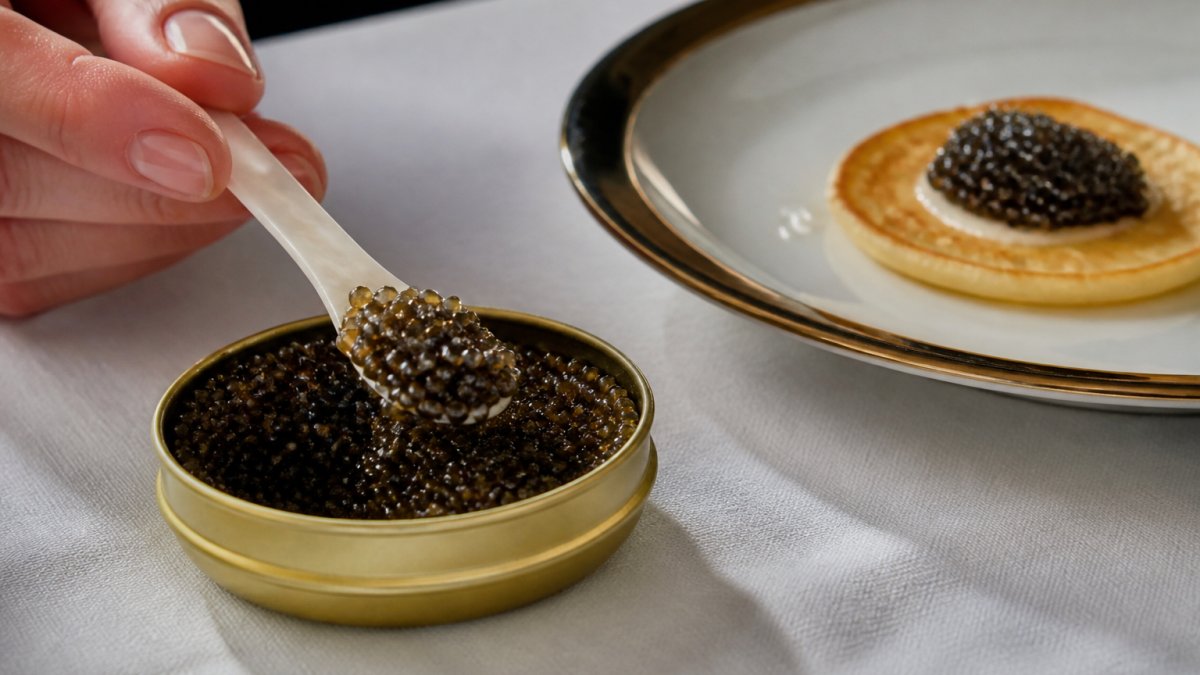
Quality shows up in three places: appearance, aroma, and texture. A high-quality tin has glossy, intact beads that separate easily, a clean sea scent with no ammonia, and a firm pop when pressed against the roof of your mouth. If the beads are mushy or the smell is sharp, walk away.
A Practical Inspection Checklist
Use this before you pay:
- Beads are glossy, not dull or cloudy
- Beads are intact, not crushed or leaking
- No ammonia or fishy smell when the tin is opened
- Liquid is minimal, not pooling at the bottom
- Tin is cold on arrival and was shipped with a cold pack
- Label names the species and the country of origin
- Harvest or production date is visible
Best Caviar for Beginners: Mild, Forgiving, and Worth the Money
First-time buyers should start with farmed white sturgeon. The flavor is mild, the beads are medium-sized, and the price is the most reasonable of the true sturgeon varieties. It lets you learn what good caviar tastes like without paying Beluga prices.
Paddlefish roe is the next step down in price and a solid choice for a party where the caviar is one part of a larger spread. Salmon roe is the easiest to find and the most affordable, but its saltiness and larger beads make it a different experience entirely.
A common mistake is buying the cheapest tin available for a first taste. Low-grade roe is often over-salted to mask poor freshness, which teaches you nothing about what good caviar actually tastes like.
Caviar Price per Ounce: What You Are Actually Paying For
Price per ounce is the only fair way to compare tins. A small tin with a high per-ounce price is not a bargain, and a large tin with a low per-ounce price is not automatically a deal.
What drives the number:
- Species rarity. Beluga sits at the top; paddlefish and salmon roe sit at the bottom.
- Bead size and grade. Larger, intact beads command more.
- Origin and farming method. Farmed caviar is more consistent and more available than wild.
- Freshness and shipping. Overnight cold-chain delivery adds real cost.
Pricing at restaurants and retailers varies by season, species availability, and quantity, so we recommend checking current pricing directly rather than relying on a figure you read online.
How to Buy Caviar Safely: Labels, Traceability, and Cold Chain
Safe buying comes down to one question: can you trace the tin back to a species and a source? A reputable dealer will tell you the species, the country of origin, and the farm or producer without hesitation. The practical skill is knowing which details to ask for, in what order, and what a good answer sounds like.
What a Traceable Listing Should Show
Before you add a tin to a cart, check the product page for these details:
- Species name, not just "caviar"
- Country of origin
- Farm or producer name
- Production or harvest date
- Lot or batch number
- Storage and shipping instructions
A listing that shows a species name but no origin, or an origin but no producer, is partially traceable. That is common, but it is weaker than a listing that shows all of the above. When details are missing, ask the seller directly and keep the answer. A seller who can name the species and the farm is demonstrating that the supply chain is documented.
Species Identification and Legal Labeling
Species matters because it drives flavor, bead size, and price, and because mislabeling is a real risk in seafood. Under FDA seafood labeling and safety guidance, imported and domestic seafood must meet specific labeling and handling requirements. Use the label as your first check and the seller's answer as your second.
A useful habit is to compare the species name on the listing with the species name on the tin when it arrives. They should match. If the tin uses a vague term such as "premium caviar" or "imported caviar" without a species name, the product is not fully traceable regardless of how it tastes.
How Cold-Chain Shipping Works
Caviar is perishable and must stay cold from the producer to your door. A typical shipment uses an insulated liner, one or more frozen cold packs, and overnight or express delivery so the product spends as little time in transit as possible. The cold pack is not decoration; it is the mechanism that keeps the tin in a safe temperature range. That is why shipping speed and packaging quality are part of the product, not an afterthought.
When you order, confirm three things: the ship date, the delivery speed, and the packaging method. A seller who ships overnight with insulated packaging is managing the cold chain. A seller who cannot tell you how the tin is packed is asking you to take the risk.
Delivery Checks When Your Order Arrives
Open the box the moment it lands. The tin should still be cold, the cold pack should still be partially frozen, and there should be no smell before you open the seal. Photograph the packaging if anything looks wrong, and contact the seller before you serve it.
A simple arrival check:
- Feel the tin. It should be cold to the touch, not cool or room temperature.
- Check the cold pack. Partially frozen is the target; fully melted is a warning.
- Smell before opening. No ammonia or sour note.
- Photograph everything. Packaging, cold pack, tin, and label.
- Contact the seller first. Do not serve a suspect tin to guests.
Questions to Ask Before You Buy
A short script saves money: Which species is this? Where was it farmed or harvested? When was it produced? How is it shipped, and how fast? What is the lot number? A seller who answers all five without hesitation is a safer source than one who answers only the price.
Tasting Top Tier Caviar: A Structured Method
Taste caviar the way you would taste wine: slowly, in order, and without distractions. Serve it cold, on a small spoon or a plain blini, and skip the chopped onion and egg for your first taste. Those toppings mask the flavor you are trying to judge.
A simple method:
- Look. Note bead size, color, and gloss.
- Smell. A clean sea scent, nothing sharp.
- Press. Roll a few beads between your tongue and palate. They should pop, not dissolve.
- Hold. Let the flavor sit for a few seconds before swallowing.
- Compare. Taste two varieties side by side if you can.
At Le Nocturne, we serve caviar as part of a French menu built around A5 Wagyu, Steak Frites, and Duck Confit.
Common Buying Mistakes That Waste Money
The biggest waste is buying on label alone. "Premium" and "imported" mean nothing without a species name. The second is buying a large tin for a small group; caviar does not improve with time once opened, so match quantity to the number of guests.
Other mistakes we see:
- Serving caviar with metal utensils, which can alter the flavor
- Letting the tin sit at room temperature before serving
- Buying from a seller who cannot explain the cold chain
- Assuming higher price always means better quality
| Mistake | What It Costs You | The Fix |
|---|---|---|
| Buying by label only | Money spent on mediocre roe | Ask for the species name |
| Oversized tin for a small group | Spoiled caviar | Plan roughly per guest |
| Metal spoon | Altered flavor | Use mother-of-pearl or plastic |
| Warm serving temperature | Muted flavor | Serve cold, straight from the fridge |
| No traceability | Unknown origin | Buy only from dealers who can name the source |
Frequently Asked Questions
How can you tell if caviar is high quality?
Start with the beads: they should be whole, glossy, and separate rather than crushed or pooling in liquid. Smell the tin when you open it. Fresh top tier caviar smells clean and mildly briny, like the sea, not fishy or ammonia-heavy. Taste a small amount plain, without garnish, and check that the flavor is buttery and mild rather than sharply salty. Finally, check the label for species, origin, and a harvest or lot date, since traceability is one of the strongest signals of a serious supplier.
What is the best caviar for beginners?
Mild, lower-salt varieties are the easiest entry point. American paddlefish and white sturgeon caviar are usually described as buttery and gentle, with medium bead size and less intense brininess than older-style Caspian caviar. Salmon roe is a different product entirely, larger and much saltier, so do not treat it as a substitute if you want the sturgeon experience. Order a small sample tin first, taste it plain, then decide whether you want a bigger tin of the same variety or a step up in intensity.
How much does caviar cost per ounce, and is it worth it?
Caviar price per ounce varies widely by species, grade, and origin, and pricing changes often, so check the current price with the seller rather than relying on a fixed figure. What matters is cost per serving: a typical serving is about 15 to 30 grams, roughly half an ounce to one ounce, so a small tin serves two people comfortably as a starter. Compare sellers on price per ounce at the same species and grade, not across different products, and factor in shipping and cold-chain handling.
How do you buy caviar safely online?
Buy from sellers who list the sturgeon species, the producing region or farm, and a harvest or lot date on the label. Ask how the order ships: caviar needs consistent refrigeration, so look for overnight or two-day service with insulated packaging and gel packs. When the box arrives, check that the tin is still cold to the touch and that the seal is intact. Store it in the coldest part of your refrigerator and open it close to serving time rather than days in advance.
Finding top tier caviar is less about spending more and more about asking better questions. Species, freshness, and cold-chain handling decide the experience long before price does. When you want to taste caviar the way it is meant to be served, alongside French classics and a proper cocktail list, Le Nocturne in downtown Livermore is built for exactly that kind of evening. View our menu and plan your next night out with us.